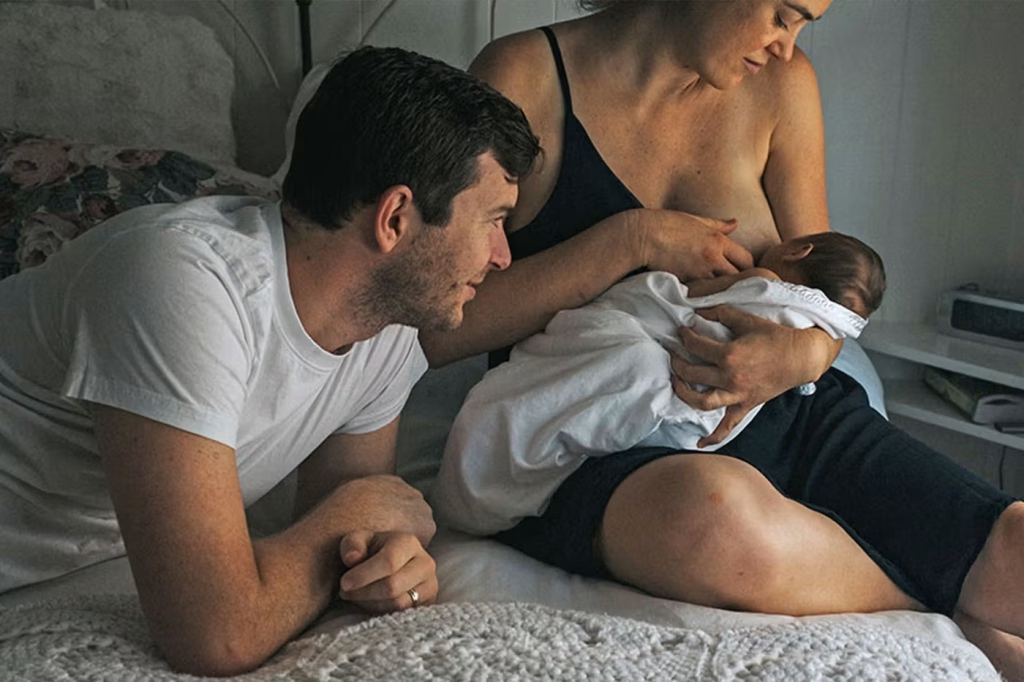
How to put a newborn to sleep is one of the biggest challenges for new parents. During the time of the first few months. Babies’ care is often very physical, and we use our bodies to breastfeed, cradle, cuddle, carry, and help them sleep. It’s an undoubtedly a time of great love, but also of great dedication. And sometimes, getting the rest you need and many would like isn’t possible. Understanding the evolution of sleep will allow you to have clear expectations, support your baby according to their abilities and needs. To avoid frustrations when things don’t go as planned.
Your New Baby (Under 2 months Old) and Sleep
At First your new baby is on a 24 hour feeding cycle and a sleep wake cycle. Newborns can sleep between 14 and 17 hours a day. They are only awake for 1 to 3 hours at a time.
Signs that your baby is getting sleepy include:
- Crying
- Rubbing their eye
- Try putting your baby to bed as soon as they are drowsy but not yet asleep
To encourage your newborn to sleep more at night rather than during the day:
- Expose them to light and noise during the day
- As night time or bed time approaches, dim the lights keep the environment calm and reduce the amount of activity around your baby
- When your baby wake up at night to feed, and keep the room dark and quiet
Your baby (3 to 12 months) and sleep
By 4 months of age your child may sleep for about 8 to 9 hours at a time. Between 6 and 9 months of age. Most babies will sleep for 10 to 12 hours, and during their first day of life it is common for babies to take 1 to 4 naps a day, each lasting from 30 minutes to 2 hours.
This is how you put a newborn to sleep and try to make the bedtime more routine consistent and enjoyable.
- Give your newborn baby their last feeding of the night shortly before putting them to bed. And never put them to bed with a bottle as this cause bottle tooth decay
- Spend quiet time with your newborn by rocking, walking, or simply cuddling them.
- Put your child to bed before they are sound asleep. This will teach them to fall asleep on their own.
Put your newborn to bed before they are sound asleep. Your baby may cry when you put them in bed because they are afraid of being away from you. This is called separation anxiety. Simply go in speak in a calm voice, and gently rub your baby’s back or head. Do not take your newborn out of bed once they have calmed down and leave the room. Your newborn will soon be in another room.
If your baby wakes up at night to feed- don’t turn on the lights.
- Keep the room dark and quiet, just use a night light if needed.
- Keep feedings as brief and discreet as possible. Don’t distract your baby.
- Once your baby has fed, burped, and settled down, put them back to bed. If you stick to this routine, your baby will get used to it and fall asleep on their own.
By 9 months of age, if not earlier, most babies can sleep for at least 8 to 10 hours without needing a night light feeding. Babies will still wake up during the night. However over time your newborn will learn to soothe themselves and fall back asleep.
What is the best time to put a newborn to sleep?
Newborns Sleep Time: Every baby is different and sets their own sleep rhythms but they do have in common that their needs change as they grow.
At first the newborn will set their own sleep rhythm, sleeping almost all day and night and waking up to eat.
Until 6 months babies need to sleep many hours in relatively short periods. It is then that they begin to regulate their sleep and can sleep through the night or with brief awakenings.
What position should a newborn sleep in?
Newborns sleep on Their Back: The scientific community fully agrees that to reduce the chances of a baby suffering infant death syndrome. It is best for them to sleep on their back without a pillow.
This recommendation should be followed during the baby’s first year of life. However it is during the first 6 months that special attention must be paid ensuring they sleep on their backs as the possibility of SIDS is higher.
"A baby who gets enough rest will be more active, calmer, and in a better mood."
In conclusion, sleep is an essential need for all newborns and children as it directly influences their physical and mental development as well as their emotional well being. Which promotes their growth and learning. Therefore applying the best tips to help a newborn sleep safely not only improves their rest but also their quality of life and that the whole family creates health routines from the first months.